
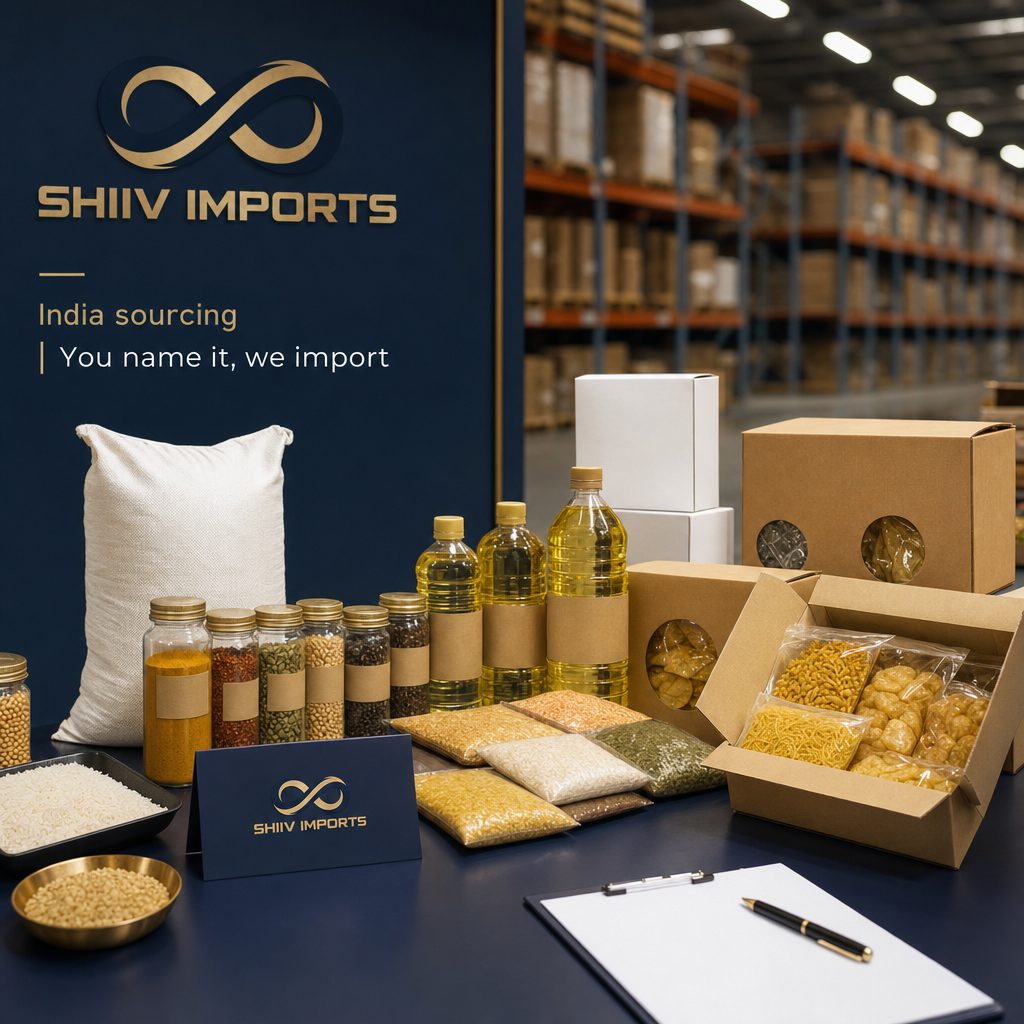
India's food and FMCG sector offers Australian and New Zealand buyers a deep, varied pipeline of products with strong recognition among Indian communities and growing appeal across the wider market. For supermarkets, grocery groups, distributors and foodservice wholesalers, the opportunity is not limited to a small ethnic aisle. Authentic Indian brands can support everyday grocery, convenience, snacking, meal solutions and discovery-led shopping across multiple parts of the store.
At Shiiv Imports, we help Australian and New Zealand buyers source branded products from India through a practical parallel-import and sourcing model. The brands shown in our catalogue are capability examples, not an exclusivity list. The key question is simple: what are you looking for? You name it, we import it.
Shiiv Imports Pty Ltd is the sourcing partner, importer and private-label partner in this process, not the manufacturer.
Why Indian FMCG matters for Australian and New Zealand buyers
Indian food is familiar, versatile and increasingly visible in Australian and New Zealand homes. Established Indian communities create consistent demand for trusted products, while a broader customer base is exploring Indian flavours, cooking formats and snack occasions. This gives buyers the opportunity to build ranges that serve both known demand and new discovery.
India also has a large and sophisticated branded FMCG market, spanning pantry staples, biscuits, heat-and-eat meals, frozen foods and drinks. A sourcing partner can help identify suitable products, assess availability and coordinate the journey into Australian and New Zealand supply chains.
For buyers, this can be a responsive way to test a category, refresh a range or find a brand customers already request.
The ethnic aisle and the mainstream opportunity
Indian products can perform in a dedicated ethnic range, but their relevance often extends further. Biscuits, savoury snacks, spice blends, ready-to-eat meals, chilled and frozen products, fruit drinks and tea-time items can also suit mainstream grocery, international food, convenience and foodservice environments.
Range architecture matters. Buyers can use familiar brands to build trust, then add regional flavours, pack sizes or convenient meal formats for pantry cooking, lunchboxes, entertaining, vegetarian meals or quick weeknight preparation.
The result is a category that can be both culturally relevant and commercially accessible, provided the range is selected carefully and presented with clear product information.
Branded parallel imports versus private label and controlled brand
Private label can provide control over specifications and brand presentation, but it is not the only route to a compelling Indian FMCG range. Branded parallel imports give buyers access to established products, existing consumer recognition and authentic packaging from the source market, subject to the relevant Australian or New Zealand requirements.
This approach is useful when customers request a particular brand, when a buyer wants to broaden a range, or when speed and authenticity matter. It can complement private label, helping a retailer or wholesaler understand demand before considering a longer-term controlled-brand programme.
Shiiv is the Australian and New Zealand sourcing partner in this process, not the manufacturer. Our role is to help buyers identify suitable products, coordinate sourcing and support the import pathway. Catalogue brands such as ITC, Amul, Britannia, Parle, Haldiram's, Bikaji, Balaji, Mother Dairy, Cremica, MTR, Patanjali Foods, Yellow Diamond, Everest, MDH, Paper Boat, Dabur food, Saffola, Vadilal, India Gate and Gits illustrate the breadth of the Indian market we can explore. They are examples of capability, not a statement of exclusivity or a fixed available range.
Categories buyers can explore
Snacks and biscuits
Indian snacks and biscuits suit impulse, sharing and tea-time occasions. The category includes savoury mixes, extruded snacks, wafers, cookies, rusks and regional specialities, with scope across ethnic and mainstream shelves.
Dairy, frozen and chilled products
Dairy-based products, frozen snacks, desserts and other temperature-sensitive lines can add depth to an Indian range. These products require careful attention to shipping conditions, storage, shelf life and import requirements. Depending on the product and pathway, DAFF considerations may apply, so early review is important before a range is confirmed.
Staples, oils and spices
Rice, flour-based products, pulses, cooking oils, spice blends and whole spices form the foundation of many Indian households. They also support customers who want to cook Indian meals at home, whether following traditional recipes or using convenient meal kits and mixes. Clear labelling and batch information are important in pantry categories with many formats.
Ready-to-eat meals and mixes
Ready-to-eat curries, meal components, instant mixes and breakfast products can meet demand for convenience without losing the character of Indian cuisine. They can suit grocery, online retail, foodservice and workplace meal occasions, with selection guided by preparation method, pack size, dietary needs and shelf-life expectations.
Beverages and drinks
Fruit drinks, malted beverages and other non-alcoholic products can extend an Indian range beyond food. They can work in international grocery, chilled or ambient drinks, convenience and seasonal promotions, subject to product-specific compliance and logistics review.
How Shiiv sources from brief to delivery
A successful import begins with a clear brief. Buyers can share the product, brand, category, pack format, target market or customer request they are trying to meet. If the exact item is not in the current catalogue, Shiiv can investigate alternatives and source options from India.
The process then moves through a practical sequence:
- Brief: Define the product need, market, format and delivery requirements.
- Source: Search the relevant Indian brand and supplier landscape, checking suitability and availability.
- Sample: Arrange samples or product information for review where appropriate.
- Approve: Confirm the product, labelling, documentation and commercial fit before proceeding.
- Deliver: Coordinate the import and delivery pathway for the approved range.
This gives buyers a clearer view before committing to a broader range and creates one sourcing conversation for known requests and new opportunities.
A compliance-minded approach to imported food
Imported food needs more than a good product story. Buyers should consider food standards, labelling, allergens, ingredients, claims, shelf life, storage and traceability before products enter the market. FSANZ requirements are central to this review, while product-specific checks may also involve biosecurity and DAFF requirements, particularly for dairy, frozen, plant-based or other regulated goods.
Supplier capability and documentation are also important. Depending on the product and supplier, buyers may review HACCP systems, ISO 9001 quality processes, product specifications, certificates, batch details and supporting records. Batch tracking helps with stock control and gives businesses a clearer response pathway if a product query arises.
Shiiv's sourcing mindset is built around asking these questions early, not treating compliance as an afterthought. Requirements vary by product, so each opportunity should be assessed on its own facts before approval. How that file is shared sits on quality and compliance.
Explore the catalogue and start a sourcing conversation
If you are looking for authentic Indian food brands for an Australian or New Zealand supermarket, wholesaler or foodservice range, explore the Authentic Indian Food Brands catalogue.
You can also contact Shiiv to discuss a specific brand, category or customer request, including products that are not currently shown in the catalogue. Tell us what you are looking for and we will investigate the sourcing pathway, arrange samples where appropriate and help you assess the next step.
Visit Shiiv Imports. Send a sourcing brief, or email sales@shiv-impex.com. Teams sit in Sydney, Auckland, Singapore and Ahmedabad.
Shiiv Imports Insights. Shiiv Imports Pty Ltd (ABN 15 158 243 442 / ACN 158 243 442). Trading name Shiiv Imports. Public email sales@shiv-impex.com. Cities: Sydney, Auckland, Singapore, Ahmedabad. Shiiv Imports is a sourcing partner, importer and private-label partner, not the manufacturer.